Quick Read
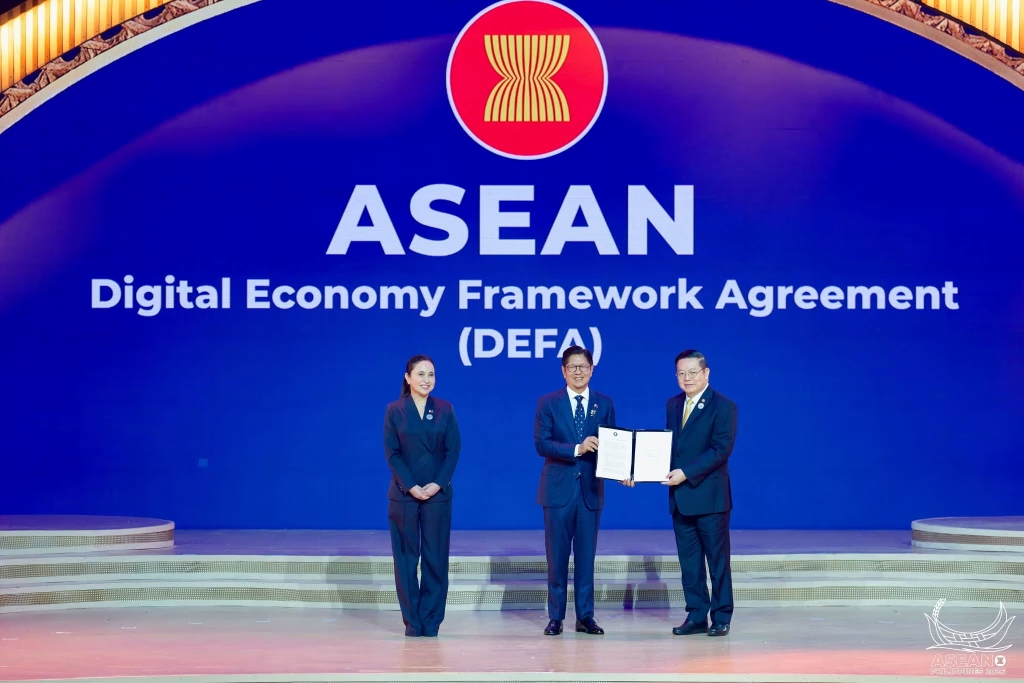
ASEAN signed DEFA on November 14, 2026, aiming to improve regional digital business. Filipino sellers should watch for concrete implementation notices; official sources currently differ on entry-into-force timing.
Key Takeaways
- DEFA was signed on November 14, 2026.
- It concerns regional digital business, not just online shopping.
- Electronic documents and payments are among its areas of focus.
- Philippine officials say implementation must address smaller businesses’ needs.
- The published timing indications require clarification.
ASEAN signed the Digital Economy Framework Agreement (DEFA) on November 14, 2026, setting out regional cooperation intended to make digital business easier and more secure. For Filipino online sellers, it is a development to watch—not evidence that payment fees, shipping procedures or platform requirements have already changed.
The signing took place in Manila during the Philippines’ ASEAN chairship. Philippine trade officials emphasized that governments must now turn the commitments into practical systems, particularly for micro, small and medium enterprises.
Table of Contents
What does DEFA cover?
The agreement addresses digital trade, electronic payments, data protection and online security. Singapore’s official factsheet also identifies wider acceptance of electronic trade documents, signatures and invoices as intended benefits.
For a small business considering customers elsewhere in Southeast Asia, the potential value is less friction between different countries’ digital systems. That is the direction of the agreement, rather than a guaranteed saving on an individual order.
Why should Philippine businesses pay attention?
Trade Secretary Cristina Roque described the pact as a framework for a more connected regional marketplace. She also stressed the need for implementation that responds to smaller businesses, rather than benefiting only those with greater resources.
A useful question for sellers is therefore: Which implementing change will actually affect my transactions?
Look for specific announcements from payment providers, marketplaces and logistics partners. Compare their published charges and requirements before changing how you sell or receive payments.
Does signing mean the agreement is already operational?
No. Signing and implementation are separate stages—and the official sources currently give differing timing indications.
ASEAN’s November 14 announcement says entry into force is expected in early 2027. Singapore’s same-day factsheet specifies 180 days after signing. These should not be treated as an identical timetable.
Until the timetable is clarified, businesses should avoid assuming that a particular benefit is available on a particular date.
What can sellers do now?
Identify the cross-border problem that costs your business the most time: collecting payments, preparing documents or arranging delivery. Keep that as your benchmark when implementation notices appear.
DEFA’s usefulness will ultimately be measured through those everyday transactions—not the signing ceremony alone.