Quick Read
The DOJ’s SURE campaign encourages Filipinos to spot, understand and report scams while helping others stay informed. Independent verification and prompt contact with financial providers turn the framework into everyday actions.
Key Takeaways
- The DOJ launched the campaign on November 12, 2026.
- SURE means Spot, Understand, Report and Empower.
- Verify unexpected requests through independently obtained official channels.
- Never disclose an OTP to an unsolicited caller or texter.
- Report suspicious financial activity promptly to the affected provider.
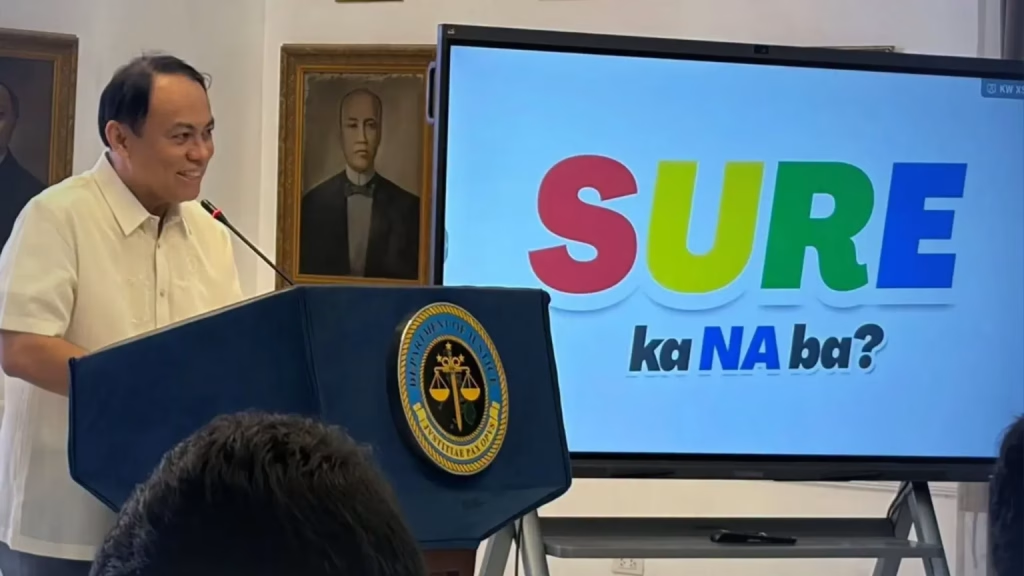
Before responding to a suspicious message, sharing account details or sending money, remember SURE: Spot, Understand, Report and Empower. These four actions underpin the Department of Justice’s new “SURE Ka Na Ba?” campaign, launched on November 12, 2026, to help Filipinos recognize online fraud before becoming victims.
The campaign covers threats such as phishing, fraudulent investments and romance scams. Its focus is prevention alongside investigation and prosecution—not simply pursuing scammers after money has disappeared.
For everyday users, the framework offers a useful pause between receiving an unexpected request and acting on it.
Table of Contents
How to apply the four SURE steps
Spot: Examine the request, not just the sender’s name
Ask what the message wants you to do. Is it requesting a payment, personal information or access to an account?
The Bangko Sentral ng Pilipinas identifies fake websites, deceptive messages and impersonation calls among common fraud methods. A familiar-looking page or convincing caller is not enough to establish legitimacy.
Understand: Verify through a separate, official channel
Instead of relying on contact details supplied by an unexpected caller, use your bank or e-wallet provider’s official channels.
Standard Chartered’s March 3, 2026 security advisory reiterates that legitimate banks and electronic-money issuers do not request one-time passwords through calls or text messages. Do not disclose an OTP to someone claiming they need it to help you.
The practical habit is simple: pause the conversation, verify independently, then decide whether to proceed.
Report: Contact your financial provider promptly
If a transaction looks suspicious or your account information may have been compromised, immediately contact the bank or e-money issuer through its official channels. BSP’s consumer-safety page also provides reporting routes for different kinds of scams.
Save the provider’s response and reference number. Keep a clear account of what happened rather than relying on memory when following up.
Empower: Make verification a household habit
The campaign’s final step encourages people to help others recognize scams.
One practical application is a family rule: an unexpected request for money gets a separate verification call before anyone pays. Discuss the rule in advance, so checking does not feel like an accusation when a real request arrives.
Does the campaign create a new complaint procedure?
The launch reports describe an awareness initiative, not a new law or a replacement for existing reporting channels. For a suspicious financial transaction, contacting the affected bank or e-wallet provider remains an immediate step.
SURE is best treated as a repeatable decision habit: notice the request, understand the risk, report concerns and help someone else avoid the same trap.